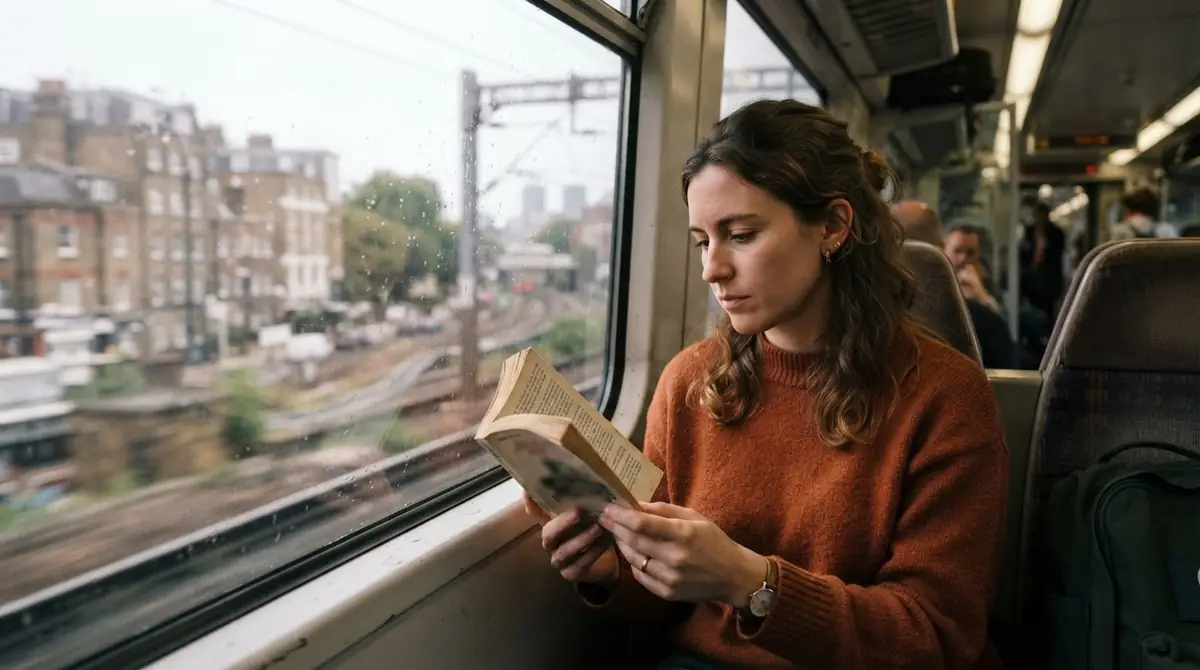
How we chose these classics
A “classic” list can easily become a list of books people feel guilty about not reading. We took a different approach. Every book here is included because it is still enjoyable, still discussed and still useful for understanding people and the world. We also mixed eras, countries and lengths so there is a realistic starting point for everyone.
Each entry includes a difficulty rating:
- Easy: modern-feeling language, quick pace
- Medium: some older language or a slower start
- Challenging: long, dense or structurally complex
The list
1. Pride and Prejudice — Jane Austen (1813)
A witty social comedy about first impressions, family and money. The best first classic for most readers. Difficulty: Medium. Read our full Pride and Prejudice review.
2. Nineteen Eighty-Four — George Orwell (1949)
A bleak, gripping vision of surveillance and propaganda that gave us words we still use daily. Difficulty: Easy to Medium. See our 1984 review.
3. To Kill a Mockingbird — Harper Lee (1960)
A childhood story and courtroom drama about justice, prejudice and empathy. Difficulty: Easy. Read the full review.
4. The Great Gatsby — F. Scott Fitzgerald (1925)
Short, glittering and sad, a story about reinvention and the limits of the American Dream. Difficulty: Easy to Medium. Our Great Gatsby review covers its symbols.
5. Jane Eyre — Charlotte Brontë (1847)
An orphan governess with a fierce sense of independence, a mysterious employer and a house full of secrets. Difficulty: Medium.
6. Frankenstein — Mary Shelley (1818)
Often remembered as a monster story, it is really a novel about responsibility, loneliness and the consequences of creation. Difficulty: Medium.
7. Things Fall Apart — Chinua Achebe (1958)
A powerful portrait of Igbo society in Nigeria and the impact of colonialism, told through the life of a proud man named Okonkwo. Difficulty: Easy to Medium.
8. Crime and Punishment — Fyodor Dostoevsky (1866)
A psychological thriller from inside the mind of a young man who commits a murder and cannot escape his own conscience. Difficulty: Challenging.
9. One Hundred Years of Solitude — Gabriel García Márquez (1967)
The magical, sprawling history of the Buendía family and their town of Macondo. Keep a family tree handy. Difficulty: Challenging.
10. Of Mice and Men — John Steinbeck (1937)
A very short novel about two migrant workers and their fragile dream of owning land. It can be finished in an evening. Difficulty: Easy.
11. Wuthering Heights — Emily Brontë (1847)
A stormy, intense story of obsession and revenge on the Yorkshire moors. Not a gentle romance. Difficulty: Medium to Challenging.
12. The Picture of Dorian Gray — Oscar Wilde (1890)
A young man stays beautiful while his portrait records every sin. Witty, dark and full of quotable dialogue. Difficulty: Medium.
13. Animal Farm — George Orwell (1945)
A short fable about farm animals who overthrow their farmer, only to find new rulers just as bad. Difficulty: Easy.
14. Little Women — Louisa May Alcott (1868–1869)
Four sisters grow up during and after the American Civil War. Warm, funny and surprisingly modern in its focus on ambition. Difficulty: Easy to Medium.
15. Brave New World — Aldous Huxley (1932)
A society that controls people through pleasure, comfort and conditioning. A fascinating companion to 1984. Difficulty: Medium.
Where should you start?
If you are new to classics, choose based on how much time you have:
| If you have… | Start with |
|---|---|
| One evening | Of Mice and Men or Animal Farm |
| One weekend | The Great Gatsby |
| A week or two | Pride and Prejudice or To Kill a Mockingbird |
| A month and plenty of patience | Crime and Punishment or One Hundred Years of Solitude |
Tips for enjoying classics
- Choose a good edition. Introductions and notes help with historical context. Read the introduction after the novel if you want to avoid spoilers.
- Pair print with audio. Listening while reading can make older language much easier to follow.
- Give it 50 pages. Many classics start slowly. If it still is not working after 50 pages, it is fine to try another.
- Read with someone. A buddy read or book club makes long books easier to finish.
- Look for free legal copies. Many older classics are in the public domain and available free through Project Gutenberg and public libraries.
Final thoughts
You do not need to read every classic, and you certainly do not need to love them all. Start with one that matches your mood and time, read it your own way, and let one good experience lead to the next.
Frequently asked questions
Which classic novel should a beginner read first?
Pride and Prejudice, The Great Gatsby and Of Mice and Men are popular first choices because they are engaging, relatively short or easy to follow.
Where can I read classic novels for free?
Many classics published long ago are in the public domain. Project Gutenberg and public library apps such as Libby offer free legal copies.
Do I have to finish a classic if I don't enjoy it?
No. Giving a book about 50 pages is a fair test. Reading should be enjoyable, and there are many other classics to try.