The short verdict
Nineteen Eighty-Four is not a comfortable book, and it is not meant to be. It is a tightly built warning about what happens when a government controls not only what people do but what they are able to think. It is dark, sometimes brutal, and still one of the most useful novels you can read about power and information.
Rating: 4.7 / 5
What the book is about (light spoilers only)
Winston Smith lives in Airstrip One, a province of the superstate Oceania. Every home has a telescreen that broadcasts propaganda and watches the people in front of it. The ruling Party, led by the never-seen figure of Big Brother, controls history, language and daily life.
Winston works at the Ministry of Truth, where his job is to rewrite old newspaper articles so the past always agrees with the Party’s present claims. Quietly, he begins to doubt. He starts a secret diary, takes risks he knows are dangerous and searches for any sign that resistance is possible.
Why it is still worth reading
It explains ideas that entered everyday language
Many phrases now used in news and politics come from this novel: Big Brother, thoughtcrime, doublethink and Newspeak. Reading the book shows what these words actually mean in context, which is often more precise and more chilling than their casual use.
It is about truth, not just cameras
Readers often remember the telescreens, but the deeper fear in the book is the control of memory. If records can be changed and everyone repeats the official version, what does it mean for something to be true? Orwell’s answer is uncomfortable: truth needs people willing to hold on to evidence and to each other.
The structure is deliberate
The book moves in three parts. The first builds the world and Winston’s doubts. The second gives him, and the reader, a fragile sense of hope. The third tests that hope with full force. Knowing this can help you push through the slower middle section, because the ending depends on it.
Main themes
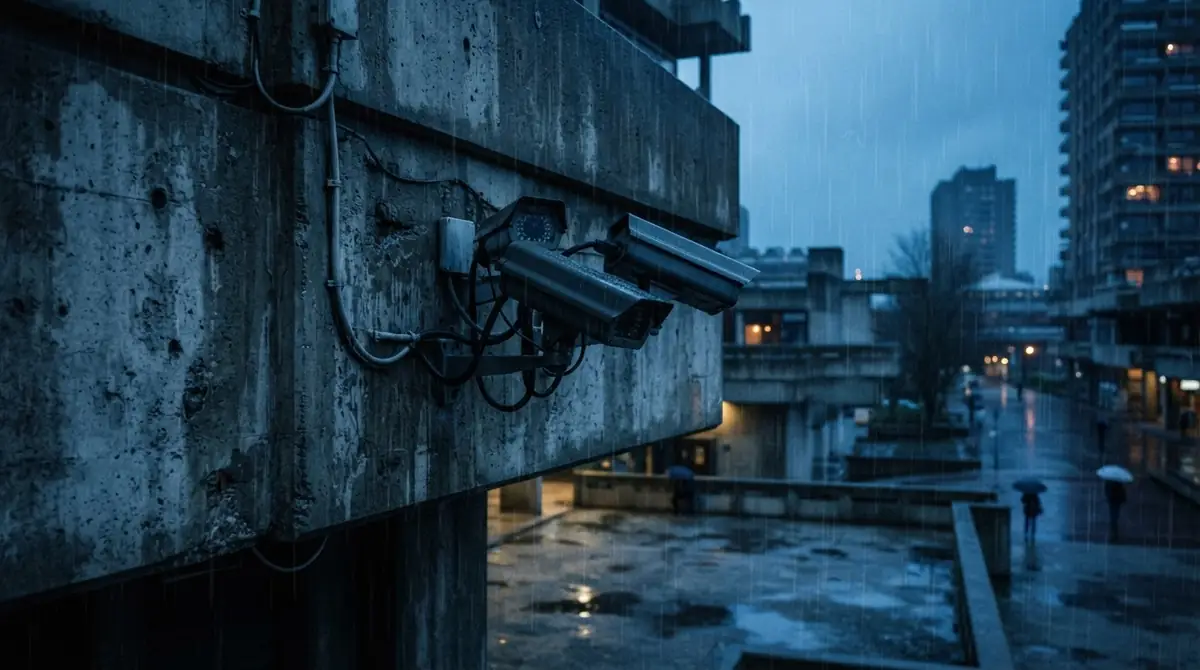
- Surveillance and fear. Constant observation changes behaviour even when no one is actually watching.
- Language as control. Newspeak shrinks vocabulary so that rebellious ideas become hard to express at all.
- Rewriting the past. Control over records becomes control over what people believe is possible.
- Loyalty and betrayal. The novel asks what remains of a person when private loyalty is crushed.
- Doublethink. Holding two contradictory beliefs at once and accepting both, a habit the Party trains into its members.
The appendix many readers skip
At the end of most editions there is an appendix on “The Principles of Newspeak”. It reads like a dry technical essay, but it is worth your time. It is written in past tense and standard English, which some readers interpret as a quiet hint about how the story’s world eventually turned out. It is a good discussion point for book clubs.
What might be hard for some readers
The novel includes scenes of psychological and physical torture in the final part. They are not gratuitous, but they are intense. The long excerpts from a forbidden political book in the middle section can also feel like a lecture; skimming them on a first read is acceptable, and returning later is rewarding.
Who should read it
- Anyone interested in politics, media literacy or history
- Students who want context for terms they hear in news and debate
- Fans of dystopian fiction who want to read one of the books that shaped the genre
- Readers who enjoy ideas-driven fiction more than fast action
If you are looking for a hopeful read or are sensitive to depictions of torture, choose a lighter time to pick it up.
How to get more out of it
- Note every “fact” that changes. Tracking the Party’s shifting statements shows doublethink in action.
- Pair it with Orwell’s essay “Politics and the English Language”. The essay explains the thinking behind Newspeak.
- Compare it with Brave New World. One imagines control through fear, the other through pleasure. Discussing which is more realistic makes for a great conversation.
- Read the appendix last and decide what you think it implies.
Final thoughts
Nineteen Eighty-Four earns its reputation. It is not a prediction of a specific year but a sharp description of how power can work on the mind. Reading it once gives you a vocabulary for spotting manipulation for the rest of your life.
Frequently asked questions
Is 1984 a difficult book to read?
The prose is clear and direct. The middle section includes a long political text that some readers find slow, but the overall story is accessible for most teenagers and adults.
What age is 1984 suitable for?
It is commonly taught to readers aged around 15 and up because of its violence and mature themes.
Is 1984 the same as Animal Farm?
No. Both are by George Orwell and deal with totalitarian power, but Animal Farm is a short allegorical fable while 1984 is a full novel set in an imagined future society.