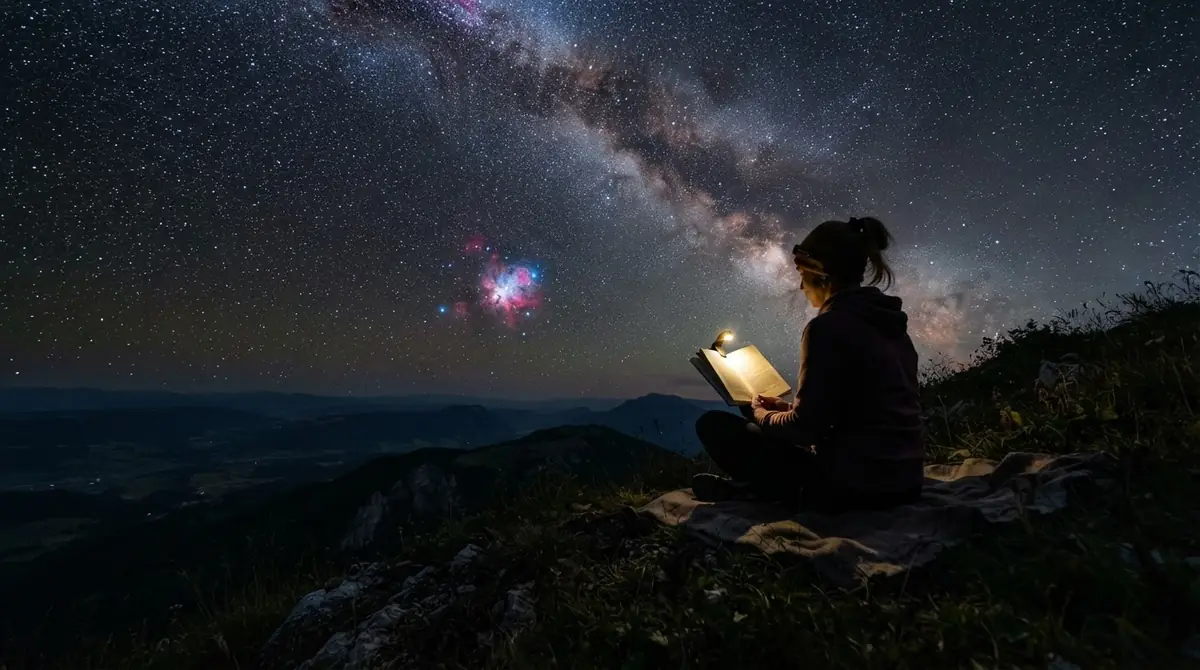
Why start with science fiction?
Science fiction is often described as the literature of ideas. It asks “What if?” and follows the answer wherever it leads: What if we could edit memories? What if we met another intelligence? What if technology controlled every part of society?
Many new readers worry that sci-fi will be full of technical jargon. Plenty of it is not. The books below focus on story and characters, with ideas that are easy to grasp.
Modern page-turners
1. Project Hail Mary — Andy Weir
A science teacher wakes up alone on a spaceship with no memory of how he got there. Funny, clever and full of problem-solving. One of the best entry points to modern sci-fi.
2. The Martian — Andy Weir
An astronaut is stranded on Mars and must use science and humour to survive. The scientific explanations are told in a casual, entertaining voice.
3. Ready Player One — Ernest Cline
A treasure hunt inside a giant virtual reality world, packed with pop culture references. Fast and easy to read.
4. Recursion — Blake Crouch
A thriller about a technology that can bring back memories, and what happens when memories begin to change reality.
5. Klara and the Sun — Kazuo Ishiguro
A gentle, thoughtful story narrated by an artificial “friend” observing the family she serves. Quiet but deeply moving.
Classic sci-fi that is still accessible
6. Fahrenheit 451 — Ray Bradbury
In a future where books are banned and burned, a fireman starts to question his job. Short and especially meaningful for book lovers.
7. Brave New World — Aldous Huxley
A society that keeps people happy through pleasure, conditioning and a drug called soma. A strong companion to Orwell’s work.
8. Nineteen Eighty-Four — George Orwell
The classic dystopia of surveillance and control. Read our 1984 review for themes and reading tips.
9. Frankenstein — Mary Shelley
Often considered one of the first science fiction novels: a scientist creates life and faces the consequences.
10. Ender’s Game — Orson Scott Card
A gifted child is trained at a military school in space to fight an alien threat. Gripping and full of moral questions.
For readers ready for a bit more
11. The Left Hand of Darkness — Ursula K. Le Guin
A human envoy visits a planet where people have no fixed gender. A thoughtful, beautifully written classic that rewards patience.
12. Dune — Frank Herbert
A huge, influential story of politics, ecology and power on a desert planet. Slow to start, but enormously rewarding.
Which one should you start with?
| If you like… | Try |
|---|---|
| Humour and problem-solving | Project Hail Mary or The Martian |
| Fast thrillers | Recursion |
| Emotional, literary stories | Klara and the Sun |
| Big political ideas | Fahrenheit 451 or Brave New World |
| Epic worlds | Dune |
Tips for sci-fi newcomers
- Don’t worry about understanding every term. Many sci-fi words are explained by context as you read.
- Pick a standalone first. Starting a long series can feel overwhelming.
- Pair books with films carefully. Watching an adaptation after reading can deepen your enjoyment.
- Try audiobooks for science-heavy titles. A good narrator can make technical passages easier.
Science fiction is having a moment
If you’ve noticed more science fiction in bookshops, the sales data agrees. According to Circana BookScan, US print sales of science fiction rose 22.1% in 2025 to just over 6 million copies, the largest increase of any adult fiction category. It’s still a smaller genre than romance or thrillers, but it’s growing fast, helped by readers who come in through accessible, optimistic stories like Project Hail Mary.
That’s good news for beginners: more new science fiction is being written for readers who’ve never picked up the genre before. Our full Project Hail Mary review explains why it’s the book we’d hand to almost any newcomer, and our look at the US book market in 2025 has the wider genre picture.
Final thoughts
Science fiction is not really about the future. It is about the present, viewed from an unusual angle. Choose the book that matches your taste, and you might discover your favourite genre.
Frequently asked questions
What is the best sci-fi book for a beginner?
Project Hail Mary and The Martian by Andy Weir are widely recommended because they are funny, fast-paced and explain science in a casual way.
Is Dune good for beginners?
Dune is rewarding but long and slow to start. Many readers enjoy it more after reading one or two lighter sci-fi books first.
What is the difference between science fiction and fantasy?
Science fiction usually imagines possibilities based on science or technology, while fantasy includes elements like magic that are not explained scientifically. Many books blend both.