The short verdict
Project Hail Mary is the most purely enjoyable science fiction novel of the last decade. It has the problem-solving thrill of The Martian, but adds something that book lacked: a relationship you’ll actually care about. If you’ve never read science fiction and want to try one book, this is a strong candidate.
Rating: 4.7 / 5
The premise (no major spoilers)
A man wakes up on a spacecraft. He doesn’t know his name. The two other crew members are dead. Slowly, through flashbacks that return as his memory does, he learns that he is Ryland Grace, a former molecular biologist turned middle-school science teacher, and that he’s a very long way from Earth.
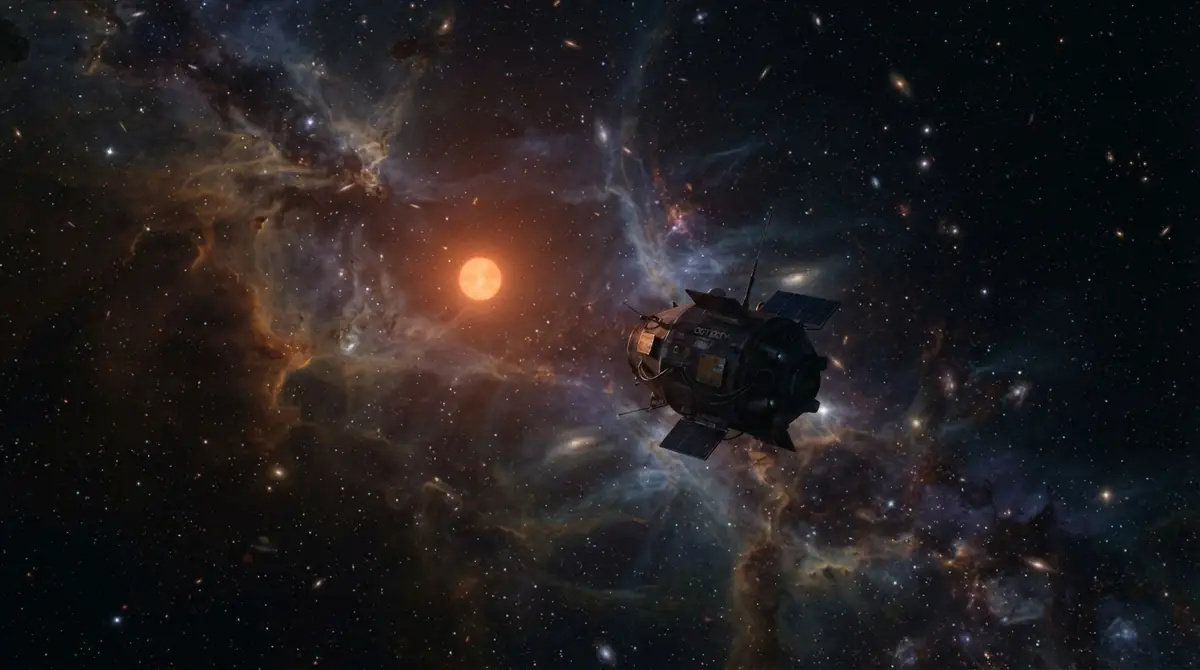
The reason is a microorganism, nicknamed Astrophage, that is feeding on the Sun’s energy. The Sun is dimming. Within a few decades, Earth’s climate will collapse. Grace’s mission is humanity’s last-ditch attempt to find out why one nearby star seems immune.
That’s all you need to know going in. The book is full of surprises, and the less you know, the better.
What works
The science is the plot
Andy Weir writes problems, and then makes his characters solve them with real reasoning. How do you measure gravity on a ship with no instruments? How do you work out the time of day when you’ve lost your memory? Grace thinks out loud, makes mistakes, does rough calculations and tries again. You don’t need a physics degree. The explanations are clear and often funny, and you finish chapters feeling cleverer than when you started.
The memory structure keeps you reading
The flashbacks are rationed carefully. Each one answers a question and opens another, especially about how Grace ended up on this ship in the first place. The answer, when it comes, reframes the whole character. It’s a smart piece of structure in a genre that often doesn’t bother.
The heart of the book
About a third of the way in, the story becomes about something more than survival. We won’t say more, except that the friendship at the centre of the novel is one of the most charming in modern fiction, built entirely through problem-solving, misunderstanding and trust. Many readers say it made them cry, which is not something people usually say about a book with this many equations.
What doesn’t work as well
- Grace’s voice is a lot. He’s chatty, sarcastic and fond of exclamation marks. If you found Mark Watney in The Martian irritating, Grace may grate too.
- Characters on Earth are thin. Apart from the formidable mission director, Eva Stratt, most people in the flashbacks exist to deliver information.
- The pacing sags in the last quarter. Some readers will find one late-stage problem-solving sequence drags on.
- The science stretches. It’s grounded and plausible in its details, but the central premise requires some generous assumptions. That’s fine for fiction. Just don’t treat it as a textbook.
Project Hail Mary vs The Martian
| The Martian (2011) | Project Hail Mary (2021) | |
|---|---|---|
| Setting | Mars | Interstellar space |
| Main problem | Survive until rescue | Save Earth’s Sun |
| Tone | Comic survival | Comic, then surprisingly emotional |
| Strongest element | Problem-solving | Friendship |
| Better first pick? | If you want something shorter | If you want more heart |
We’d start with Project Hail Mary. It’s the more complete novel.
Who should read it
- Newcomers to science fiction who want something accessible and fun
- Readers who love puzzles, engineering or “how would I solve this?” stories
- Fans of The Martian (obviously)
- Teenagers and adults alike, since it contains very little violence or sexual content
If you’d prefer slow, literary science fiction, try something from our science fiction for beginners list such as The Left Hand of Darkness instead.
Reading tips
The audiobook, narrated by Ray Porter, is widely considered one of the best audiobook performances of recent years because of how it handles the book’s non-human sounds. If you usually avoid audio, this is a good one to try. Otherwise, the print and ebook are easy, fast reads. At roughly 480 pages, most readers finish within a week or two. Our reading time calculator can give you a personal estimate.
Final thoughts
Project Hail Mary takes the gadget-and-maths fun of hard science fiction and gives it a heart. It’s optimistic about science, about cooperation and about ordinary people rising to impossible problems. That optimism is rarer in fiction than it should be, and it’s why this book deserves its reputation.
Frequently asked questions
Do I need to read The Martian before Project Hail Mary?
No. They're completely separate stories. Reading The Martian first just shows you how Andy Weir's style developed.
Is Project Hail Mary suitable for teenagers?
Yes. There's mild swearing and some peril, but very little violence and no sexual content. It's widely recommended for readers around 13 and up.
How long is Project Hail Mary?
About 480 pages in most print editions, or roughly 16 hours as an audiobook.
Is Project Hail Mary hard science fiction?
Largely, yes. The problem-solving uses real physics and biology, explained clearly. The central premise involves some creative liberties.