Start with a plan, not a shopping spree
The fastest way to overspend on books is to buy everything that looks interesting. A budget-friendly library starts with a few decisions:
- Borrow first, buy second. Use the library to test books before owning them.
- Buy books you will reread, lend or reference. Not every book needs a permanent home.
- Set a monthly book budget and track it in your book journal.
15 ways to find cheap and free books
Free options
- Public libraries. Many offer print books, ebooks and audiobooks, often through apps like Libby, free with a library card.
- Project Gutenberg. Tens of thousands of public domain ebooks, including many classics, free and legal.
- Little Free Libraries and book swaps. Small community boxes where you take a book and leave one.
- Book swap events at schools, offices and community centres.
- Friends and family. Many people are happy to pass on books they’ve finished.
Low-cost options
- Second-hand bookstores. Often the best value, with surprising finds.
- Charity shops and thrift stores. Books are frequently priced very low.
- Library book sales. Libraries sell donated and withdrawn books cheaply to raise funds.
- Garage and yard sales. Great for bulk buying.
- Online used book marketplaces. Compare condition grades and shipping costs carefully.
- Ebook deals and newsletters. Daily discounts on popular titles.
- Older editions. Paperbacks and earlier editions are usually much cheaper than new hardcovers.
- Book fairs and festivals. Look for end-of-day discounts.
- Student and teacher discounts at some bookstores.
- Trade-in programmes at some second-hand shops, where you exchange books you no longer need for credit.
What’s worth buying?
When money is limited, prioritise:
- Favourite books you’ll reread
- Reference books like dictionaries, cookbooks and guides
- Books with notes or margins you want to annotate
- Classics you want in a good edition. Start with our list of classic novels.
- Gifts for children, whose favourite books are often read dozens of times
Borrow instead when it’s a new release you’re curious about, a book you’ll probably read once, or a genre you’re testing.
How to check used book condition
- Look for loose or missing pages
- Check for water damage, mould or strong smells
- Accept light pencil marks if you don’t mind them; they can be charming
- For textbooks, confirm the edition matches what you need
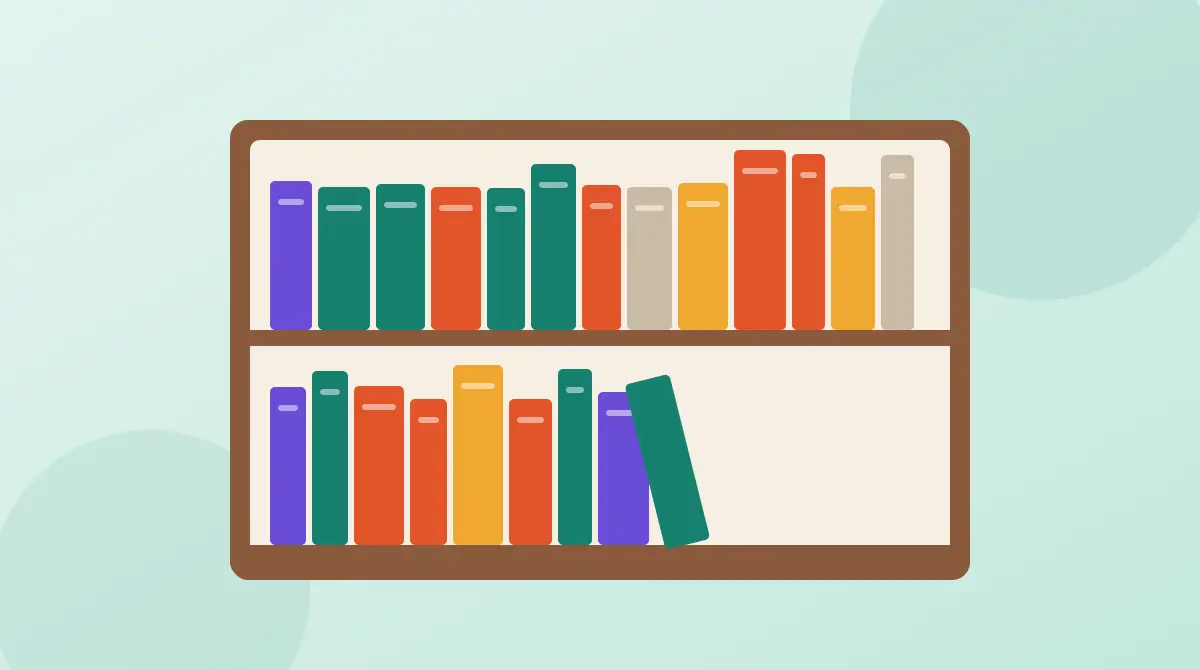
Shelving on a budget
- Second-hand bookcases from marketplaces and charity shops
- Simple wall shelves using brackets and boards
- Crates or boxes stacked sideways
- Windowsills and stairs for small collections, away from direct sunlight and damp
Protect books by keeping them away from heat, humidity and long periods of direct sunlight, which can fade spines.
Organising your library
Choose a system you’ll actually maintain:
| System | Best for |
|---|---|
| Alphabetical by author | Larger fiction collections |
| By genre | Mixed collections |
| By colour | Visual appeal, though harder to search |
| Read / unread | Motivation to read your own books |
| Favourites at eye level | Small spaces |
Many readers combine systems: genre first, then alphabetical by author.
Keep your library alive
- Do a yearly clear-out. Donate books you won’t reread.
- Lend books and keep a simple list of who has what.
- Display a “to read next” shelf to keep your collection moving.
A 12-month plan for a library you’ll actually read
Big libraries built in a weekend tend to be full of unread books. A slower plan builds a collection you love:
| Months | Focus | Where to look |
|---|---|---|
| 1–2 | List 20 books you’ve loved or reread | Your own memory and journal |
| 3–4 | Borrow your “maybe” books from the library first | Library and library apps |
| 5–6 | Buy second-hand copies of the books you’d reread | Charity shops, used bookshops |
| 7–8 | Add reference and cookbooks you use weekly | Library sales, second-hand |
| 9–10 | Add classics in good editions | Free public domain ebooks first, then print |
| 11–12 | Clear out, swap and donate | Book swaps, Little Free Libraries |
At one or two books a month, you’ll have a shelf of 20 to 30 well-chosen books by the end of the year, almost all of which you’ll actually read. Keep track of what you buy and what you think of it in a book journal.
Final thoughts
A meaningful home library grows slowly, one well-chosen book at a time. Borrow freely, buy carefully and look in second-hand places first. Your shelves will reflect your reading life rather than your spending.
Frequently asked questions
Where can I get books for free?
Public libraries, library ebook apps such as Libby, Project Gutenberg for public domain titles, Little Free Libraries and book swap events are all free options.
Is it cheaper to buy ebooks or used print books?
It depends on the title. Used paperbacks are often very cheap, while ebook deals can make new releases inexpensive. Comparing both is the best approach.
How do I protect books at home?
Keep them away from direct sunlight, humidity and heat, store them upright or flat rather than leaning, and dust shelves occasionally.